





Sailing Guide of the Elaphite Islands
Explore with us the archipelago with 13 islands and get some sailing tips and interesting facts on the Elaphite islands in South Dalmatia.
A Skipper’s Guide to the Elaphite Islands
If you are planning to sail in Southern Dalmatia, the Elaphite Islands (Elafiti) are a must-visit. This cluster of thirteen islands and islets acts as a natural protective barrier for the Dubrovnik coast. Its name, derived from the Greek word elaphos (deer), suggests that the ancient forests once beamed full of game.
For a sailor, the Elaphiti offer the perfect mix: short “island-hops”, deep-water passages, and some of the most authentic konobas (traditional taverns) in the Adriatic. Whether you are holding the helm yourself or letting a professional lead the way, here is everything you need to know about the three largest and inhabited islands and their hidden neighbors.
The Three Inhabited Islands of the Elaphite Islands
1. Sipan: the golden Island
The largest and most sophisticated of the group, Sipan is a sailor’s favorite. It holds a Guinness World Record for the density of its olive trees, but as a sailor or traveler, you’ll most likely enjoy its bays.
- The village of Sipanska Luka on the island’s western end is a deep, long bay that feels like a time capsule of the old Republic of Ragusa. no jetty
- Sipanska Luka is your best bet for a safe overnight. It is well-protected from most winds, except NW. If the main town pier is full, look for buoys belonging to a local restaurant, a meal there usually secures your spot for the night.
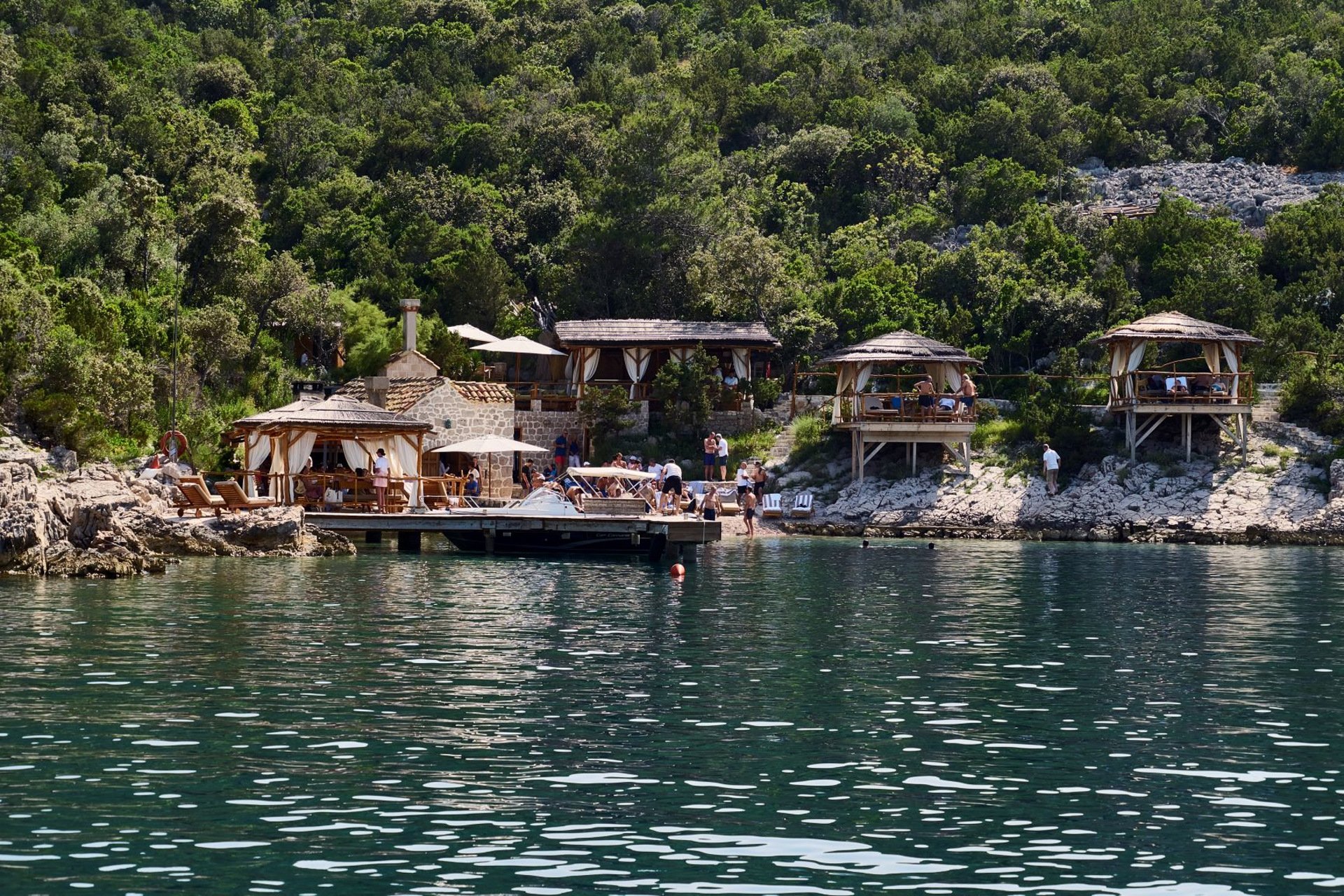
- Bonus recommendation: head on over to the other side of the island to Bowa. It’s an exclusive water-front restaurant that offers unique meals that are delicious and simple. They combine tradition with a touch of modern cuisine and serve only daily catches and locally grown produce.
2. Lopud: the sandy retreat
Lopud is the most glamorous of the three, historically a favorite summer retreat for Dubrovnik’s aristocracy.
- Sunj Bay on the southeast side has one of the very few true sandy beaches in Croatia.
- Visit the Dordic-Mayneri Botanical Garden, featuring exotic plants brought back by sea captains centuries ago.
- Sunj is an elite day-anchor spot, but it is completely open to the South. If a jugo (south wind) is blowing, the swell makes it dangerous. For a peaceful night, move to the main Lopud harbor, though space is at a premium.
3. Kolocep: the emerald gate
The closest island to Dubrovnik, and Croatian southernmost inhabited island. The locals call it Kalamota, after kalamos, the Greek word for a fishing rod, since fishing was the main occupation of the inhabitants. They were also skilled boat builders and sailors. According to a local legend two sailors from the island went on the Santa Maria to discover the Americas, they were brothers: Domeniko and Mato Konkijedević.
Today, the island is entirely car-free and smells of pine and rosemary the moment you catch the breeze.
- Explore The Blue Cave (Plava spilja) on the southern cliffs, or the three green caves further to the west. You need to anchor nearby in calm weather and swim through to explore the inside.
- The bay of Donje Celo is beautiful but exposed to the NW and NE winds. If the Bura starts to howl, head across the channel to the mainland or up to Šipan for better cover.
The Uninhabited Gems & Islets
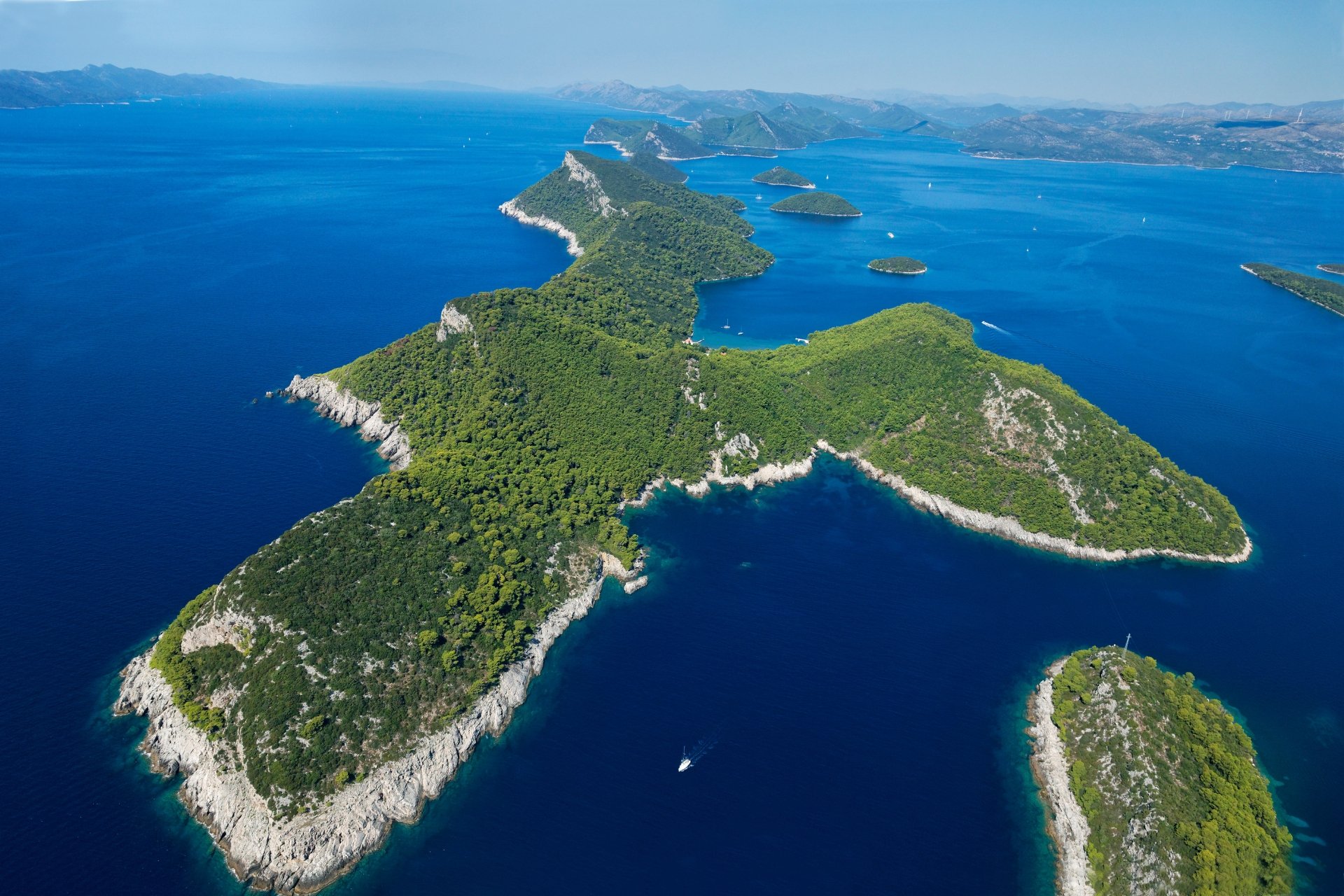
The true skipper’s secrets are found on the islands where hardly anyone or no one lives, but everyone wants to anchor.
Jakljan
Located just past Šipan, Jakljan is a green fortress of pine trees. Veli Jakljan Bay provides a safe shelter. The small jetty in the bay is most often occupied. A sandy beach at the end of the bay has an abandoned children’s resort. You can drop the anchor at depths between 7 and 10 metres. The bay is protected from the bura and jugo winds, but not from the local wind blowing from the direction of Ston. It most often starts at night and after storms.
Olipa: The Sentinel
This is the westernmost tip of the archipelago, marked by a stunning stone lighthouse. The anchorage offers good protection from all winds except NE.
Be careful because the passage between Olipa and the Pelješac peninsula (the “Mali Vratnik”) can have strong currents.
Ruda & Daksa
- Ruda: A rocky islet between Lopud and Šipan. There’s a hidden sea cave on the south side for snorkeling, but only attempt a stop here if the sea is “bonaca” (flat calm).
- Daksa: The tiny island guards the entrance to Dubrovnik’s port. It has a Franciscan monastery and a lighthouse. It’s a great “last swim” spot before heading back to the marina on a Friday afternoon.
Sveti Andrija (St. Andrew)
Further out to sea, this craggy rock features a massive lighthouse. Its beam can be seen from 24 nm away. However, it’s also the location where the Croatian Hydrographic institute measured the highest wave at 10,87 m. The Franciscan monastery from the 14th century was destroyed in the 1667 earthquake and then abandoned. Today it’s a bird sanctuary with a fascinating underwater world and known as the island of tragic lovers and love stories.
Don’t try to anchor here—the depths drop off too quickly, to a whooping 125 meters —but sail close by for incredible photos of the rugged outer coastline.
Essential Sailor Tips for the Elaphite Islands
Wind Patterns: Expect the Maestral (NW) to pick up around 1 PM. It provides world-class sailing in the Kolocep Channel. Learn more on winds of the Adriatic in our blog.
Supplies: Provisions are expensive and limited on the islands. Do your big shop at the Gruz market or the supermarkets in Peljesac, Korcula or Dubrovnik.
Navigation: Watch the Boka Falsa (False Mouth) passage between Sipan and the mainland. It’s safe, but the current can be tricky when the tide turns.
Anchoring: Always check the bottom on your charts; some bays have seagrass (Posidonia) where anchors struggle to grip and these seagrass meadows are the lungs of the Earth. Look for the white sandy patches.
If you are looking for more bare boat tips and blogs we have several blogs you might want to check out:
Certainly, the Elaphiti are more than just a day trip; they are a top “playground” for Mediterranean sailing. Take your time, watch the depth sounder, and always save room for a glass of local wine at sunset.
